
 NL
NL EN
EN DE
DE WhatsApp +34
Pitfall 6: Lockpicking and silent entry
Most people trust a strong lock, a multi-point lock or closed shutters. That feels safe. An intruder does not need to force your door. With a pick tool (such as a Lishi) he can open the cylinder silently — without forced-entry marks — as long as he can stand undisturbed at the door.
This is the final article in our series on the 6 pitfalls with alarm systems in Spain. Not a scare story — a risk that sits outside “buy a dearer lock”: silent access without traces. The answer is rarely another bolt. It is: no more undisturbed minutes at the cylinder.
1. “I have a multi-point lock — so I’m safe”
A multi-point lock is harder to force. Lockpicking forces nothing: the intruder manipulates the cylinder, draws the bolts back from inside and walks in. Extra bolts cost him seconds — not an alarm.
In Spain, vacancy matters: on the Costa Blanca & Costa Calida homes stand empty for weeks. Shutters help against windows, but are often fairly easy to push up. Then the front door (or another cylinder) is the silent target.
In one sentence: locks and shutters are barriers that delay, not always stop. As long as someone can work calmly at the cylinder, that remains the weak point.
2. How lockpicking works (briefly)
Modern tools such as the Lishi pick/decoder are made for certain cylinder brands. They help read pin positions and open the cylinder — with relatively little training, without forced entry and without noise.
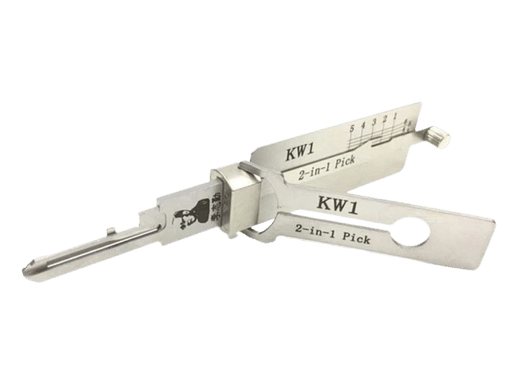
- No sound — neighbours hear nothing; an indoor siren only sounds once he is already inside.
- Fast — for many common cylinders: seconds to about a minute.
- No forced-entry marks — door and frame stay intact; an insurance claim is harder to support. See Pitfall 5.
Source: The LockPicking Lawyer · [1244] Schlage Deadbolt OWNED By Lishi Pick/Decoder
A lock sold as “high security”, opened in seconds — silent, no forced-entry marks.
3. What helps — and what does not
Only a “better” lock
A dearer lock or more bolts help against forcing. Against a silent pick at the door they mostly buy time — no noise, no alert, no flight.
Remove undisturbed time
Lockpicking needs calm, two free hands and focus at the cylinder. As soon as there is noise or an alert before he is inside, that advantage disappears.
4. What a lockpicker needs
Not brute force — undisturbed minutes at the cylinder. On an open plot or villa with drive/terrace, outdoor detection (and a loud siren) helps remove those minutes. In an apartment the plan is usually doors, windows and motion indoors — the “undisturbed door time” is the landing or front door, not the garden.
- Before the door, not behind it — indoor-only sensors react only once he is inside.
- A siren that makes noise — on approach or at the entry. More: outdoor siren & jamming.
- Alert on your phone — you see it at once, even when you are away.
Which sensors go where depends on the home. Outdoor detection (where relevant): outdoor detection. How we plan that: how it works.
5. Series complete — the common thread
A stronger lock brings peace of mind, not a guarantee. Lockpicking makes cylinders vulnerable as soon as someone can work undisturbed at the door.
Across all six pitfalls the same line holds: do not rely on standard packages or doorstep promises, but on what actually happens in a break-in, interference or vacancy — for your home. Overview: 6 pitfalls.
No obligation · at home · Costa Blanca & Costa Calida
Want to include the entry and the plot?
We look with you at locks, doors and where someone could stand undisturbed — and what is needed to take that time away.
Request a home visitMore than 3,000 installations since 2019 · Google rating 4.8 · accredited Ajax Systems Partner
Read next
This was article 6 of 6 — the final piece. Back to the series, or read on about jamming promises and interference detection.